- Discipline
- Video Design
- Client
- Sheffield Theatres
- Skills
- Concept Development Animation
- Project
- View here
Fifty years across more than seventy scenes, and a date that had to be everywhere, while carrying the context of every scene.
01 • The brief
Every scene, a different day.
I read the script, then sat down with the director, Abigail Graham. She wanted two things. The audience had to stay oriented across fifty years and more than seventy scenes, each one landing on its own date, instantly readable and never pulling focus. And she wanted the show to have a film-grade feel: grain, texture, and colour that moved with the mood.
The film-grade part was the hard one. The play is naturalistic and the set was raw OSB, the floor, the furniture, three big walls, all of it the same board. There was no clean screen, and nowhere obvious to put a filmic image without breaking the world.
02 • The idea
Etched into the wood, never placed across it.
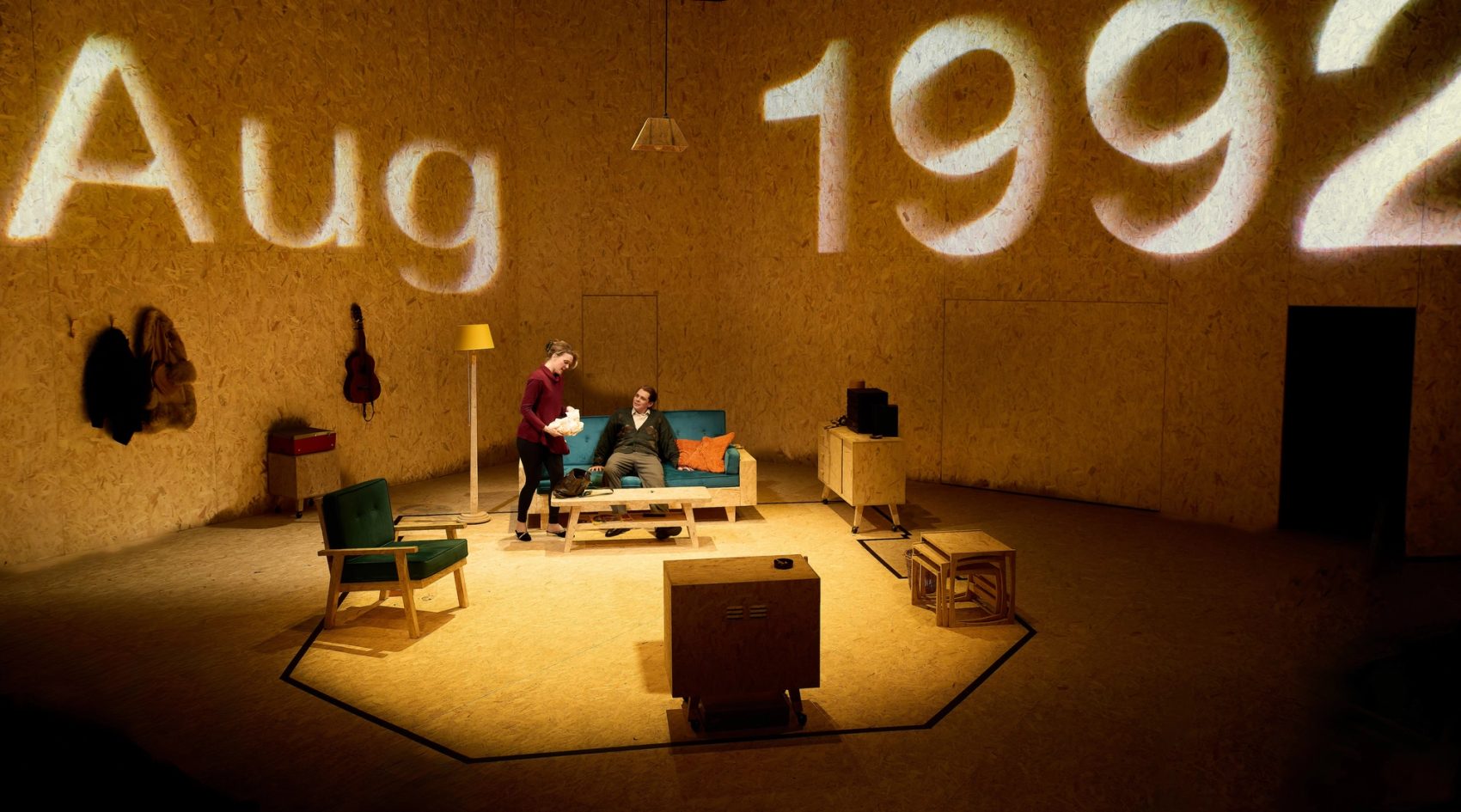
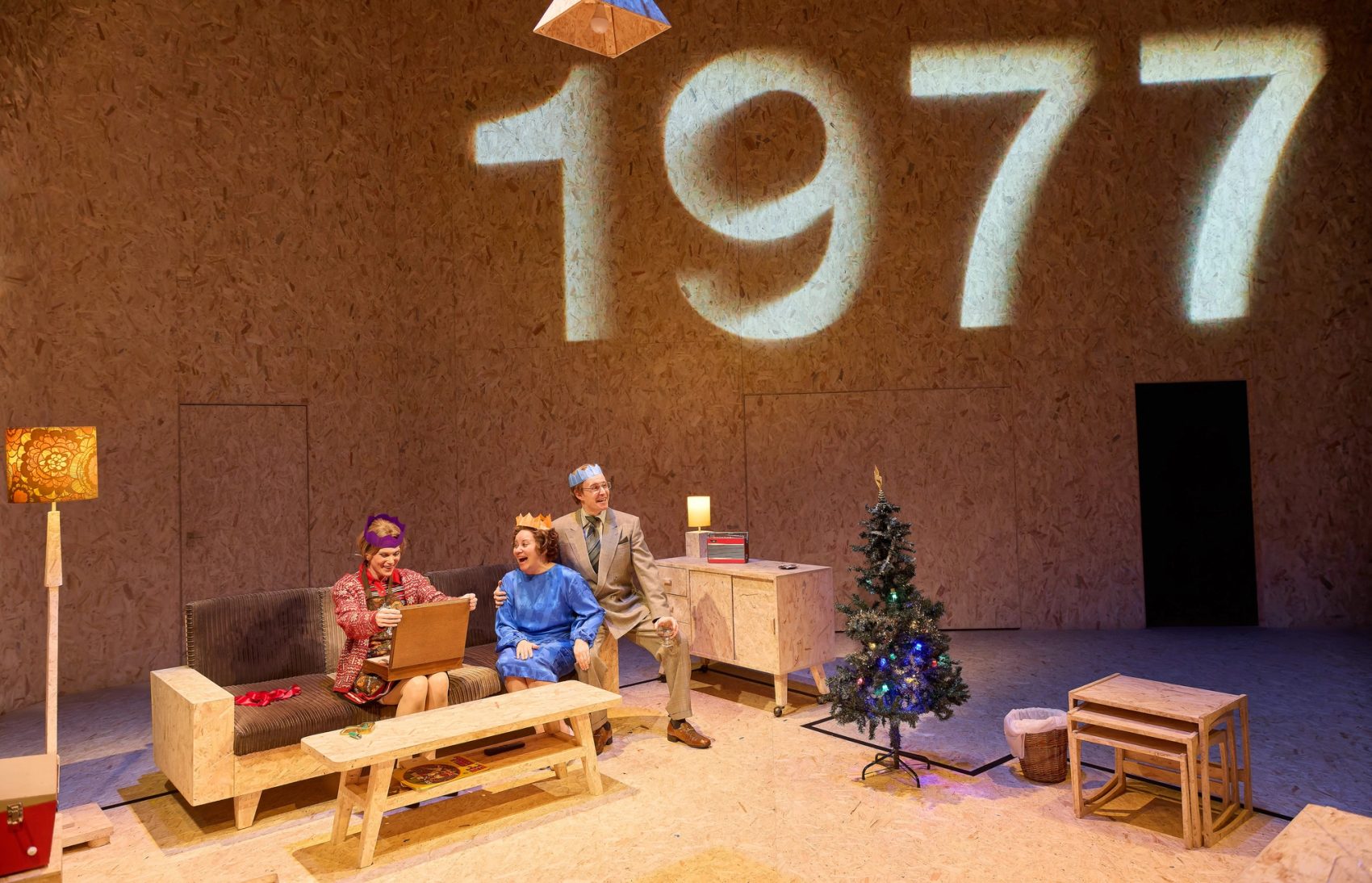
The answer was the dates themselves. I made each one look etched into the wood, the highlights and shadows forming the shape, so it read as part of the timber rather than a projection laid over it. And since the dates were the one image the show would allow, I used them as windows: each number a small opening into a filmic world, where the grain, texture and colour Abigail wanted could live without touching the naturalistic set around it.
Up close, there is no graphic at all. The number is only light catching an etched edge: a highlight along the top, shadow gathering in the indentation. It shifts the way it would if you moved a light across a real, etched surface.
03 • Transitions
Marking the passing days.
Between one scene and the next, the date rolls over to a new day, like the cards on an old split-flap clock. That turn became useful in itself: even when the audience didn’t catch the exact day, they felt the move, a quiet, steady sense that time had carried forward.
Late in the play, she begins to lose her grip on time, and the dates come apart with her, blurring until they can no longer be read. The motion stays, though: even when no one could make out the date, they could still feel each scene turn over, time moving on while her hold on it slips away.
04 • Two eras
Analogue, then digital.
I also let the dates age with the years they counted. The show divides at the millennium, and so do the dates: each one made to look like the decade it belongs to. That way each date carried its period in the texture, not just the number on the wall.
Analogue, before 2000. Film grain, highlights that halo and bloom, colour fringing the way light does through old glass.
Digital, after 2000. Built from pixels, lit colder and bluer, edges sharpened by the hard, precise fringing of a screen.
The date was the most functional thing I made on this show, and the least showy. It was also the way in: the one window where the film-grade language could live, the grain, the colour, the change of era, without breaking the naturalism around it.
